Category: Mindsets

The Epic Classroom Conclusion

Three Key Take-a-ways from “The Epic Classroom”

One:

The current system needs to be changed and the best way to do that is to train teachers in new styles of teaching and to give students a purpose for learning/participating outside of grading.

Two:

Students need to have some sense of being in charge of their own education. Teachers should provide choices and give students a lot of opportunities for self-reflection.

Three:

Students need to be challenged in order to learn. Teachers need to be able to adjust their plans based on student progress.

Overall…

I really enjoyed reading this book! I have learned so many things and reflecting on them here in my blog posts solidified my ability to take these ideas and use them in my online classroom so that my students can have a better experience. I would highly recommend reading this book!


The Epic Classroom #9

Service Learning and Character Development

Students learn a lot about being good people and building character at home and in young grades. But sometimes those topics get pushed to the side in High School because there is so much content to cover in each class already. However, Muir brings up the idea of using content-specific service learning to continue to develop students’ character while also keeping up with required class material.

I wanted to look more into the impact that service learning can have on students and the school environment as a whole. In my research I found an amazing blog post by Peter DeWitt, The Importance of Service Learning. One quote in particular stood out to me, “Service learning projects can be life changing for students. They learn empathy for others, and may even get the real life experience they need which will inspire them to find a career.” I think that the key here is the idea that service learning provides students with real life experience. I was fortunate to grow up with parents that took me to museums, volunteer work, and provided me with other experiences that prepared me for the future, but many students do not have that at home. That gap in the experiences of students at home follows them to their futures, unless we do something about it. Here are two awesome articles about the growing opportunity gap in our education system:

Bridging the Gap Between Students’ In- and Out-of-School Experiences

Why We Say “Opportunity Gap Instead of “Achievement Gap”

The Epic Classroom #8

Self Reflection and Intrinsic Motivation

“Like and Wonders should be formative, and serve the purpose of improving the project, the class, the students, and the teacher.” -Trevor Muir, The Epic Classroom (page 173)

In this quote Muir talks about the self reflection system he uses in his classes where students talk about what they liked about the project and what they wonder could have gone better. I think this phrasing is perfect! It really encourages students to talk about what they didn’t like without blaming anyone specifically. This also encourages them to make changes for the future.

“I always want my students to be intrinsically motivated above all else… But there is a reality that extrinsic motivation has power as well, and the lure of a class period, or even 20 minutes of celebration can sometimes be enough motivation for students to fight to meet a deadline.” -Trevor Muir, The Epic Classroom (page 178)

I really like what the author is saying in this quote about how he motivates his students. I agree that sometimes extrinsic motivation is powerful and necessary. But, I am wondering if we can do more to foster intrinsic motivation in our students. So I found this awesome article about 27 Ways to Promote Intrinsic Motivation In The Classroom. Some of the top ones that I can see myself using in my online classroom are:

  1. Spark curiosity in the subject matter
  2. Ask students what motivates them for sports or other activities and then tap into those motivators
  3. Praise students for meaningful accomplishments
  4. Create a trusting atmosphere
  5. Discover your students’ passions

Your Classroom, Your Way! The Epic Classroom #5

How it All Started!

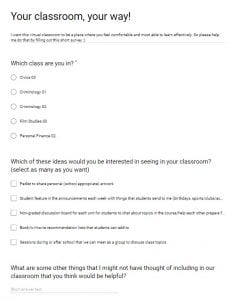
Your classroom, your way was the name of the survey I put out to all of my students to get them involved in a very important aspect of their learning – classroom environment!

I started thinking about environment after reading Chapter 5: Crafting an Epic Setting in the book The Epic Classroom by Trevor Muir. In this chapter he talks about the classroom setting being vital to the learning experience. Students and teachers are all used to the traditional rows of desks, but we need to push outside of the box and think about new ways that we can give students a more effective learning environment.

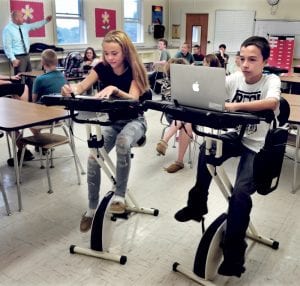
The first thing that came to mind for me was my teacher mentor during my senior year of college, Tom Hopper. His classroom set up is amazing! He has tables, standing desks, a couch, and my personal favorite… Fit desks!

I don’t have any pictures from his classroom but just to give you an idea of what Fit desks are I added a picture from Google below:

So, I thought about his awesome classroom setting and how much the students got out of it. But, the big question for me was how can this same idea translate into the virtual classroom?

Taking It Straight to the Students!

I got a few ideas together but then I thought, what if my students don’t like this idea? Then I remembered a section of the chapter I was reading talked about involving students in this process. “This is an opportunity to give students ownership of the setting of their story… they are owning another crucial piece of the learning.” -Trevor Muir The Epic Classroom pg 117.

So I put out a survey with my ideas, and the space for students to suggest other ideas:

The ideas I included were:

  • Padlet to share personal (school appropriate) artwork
  • Student feature in the announcements each week with things that students send to me (birthdays, sports/clubs/academic achievements)
  • Non-graded discussion board for each unit for students to chat about topics in the course/help each other prepare for the tests
  • Book/tv/movie recommendation lists that students can add to
  • Sessions during or after school that we can meet as a group to discuss class topics


I hope to implement at least one of these ideas in each of my classes (right now the student feature suggestion is the most popular) and I will do a follow up blog post about how they turn out!

The Why and How of PLNs

Teachers need to talk to other teachers for lots of reasons, to learn, grown, vent, work together, etc… This can be a bit difficult when you work from home and don’t see other teachers in the break room during lunch. But, that is what a Personal Learning Network (PLN) is for!

I have 3 major PLNs that I go to for support and inspiration.

First, I have the iEducator Facebook Group. This group has 6 members total so everyone contributes a lot. Because we all teach different subjects, this group is mostly for inspiration and technical support. We all share on this group awesome things that our students do that inspired us. When one of my students does something awesome I want to share it with this group because I am proud of them. I also like to look at the things my fellow iEducators post for inspiration when I need it. We also ask each other questions about important dates, share information about upcoming events, and lots of other stuff.

Second, I belong to a Facebook group called Technology in the Art Room. This group is AWESOME. I would say that about half of my time on this group’s page is spent posting/commenting and the other half I am just reading over other people’s posts. I really like this group because it is subject specific and technology specific. People share fun projects that they do with technology in their classes so I find this extremely relevant to what I do on a daily basis. I also post a lot of tips in this group. I shared with everyone about getting Google Certified, how I use Padlets in my classes, and a new podcast I found about using Google in the Classroom. 

And lastly, I joined the Art Teachers Facebook group while I was in college and wanting to gather ideas for when I became a teacher. While some of it is still relevant, mostly it has to do with projects and tools that can really only be used in the face-to-face classroom. Plus a lot of teachers in the group teach elementary school. I mostly use this group for inspiration rather than specific help.

Overall, these 3 groups are amazing to be a part of! I typically look at them after work each day for a bit and sometimes I save posts or take notes from them to implement the next day or revisit later. I like contributing to these groups, especially the Technology in the Art Room group because on there are a lot of teachers that are new to using technology for art and I feel like I can contribute a lot to that discussion. At first I missed chatting with the other teachers at lunch but these PLNs make up for a lot of that, especially the iEducator group where I am writing directly to my awesome coworkers!
I’m Working On It…

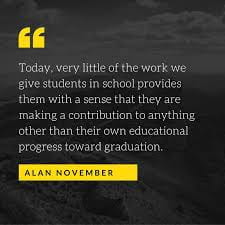
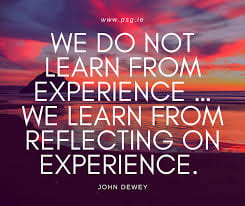
Reflection is something very important for everyone to do, especially teachers. Two major ways that I reflect, learn, and grow are through personal reflection (blogging and note taking) and going through the notes on the observations done by my supervisor.

Personal Reflection: I reflect personally by taking notes on things happening in my classes and using them to better serve my students later. I write about certain assignments that I need to clarify the directions of, what I should ask students about in the future, what I am doing really well with, and what I think that I need to improve on.

Observations: I absolutely love getting my observations back from my supervisor. Even though I do reflect on my work personally, I think that it is much better to get reflections from a fresh set of eyes. Sometimes things are pointed out to me that I never even thought of, but will greatly improve my student’s class experience. And the biggest thing that I am working on is getting students to think deeper in classroom discussions. I was given this amazing resource on what kinds of questions to ask my students in discussions to get them to think deeper about the prompt and their answer to it. Some of them that I try to include now are: “What makes you think that _______________?”, “What are some of the causes that led to ______________?”, and “How does that compare to _____________?”

Because of the reflection given to me during observations, I can better serve my students.

Quality Assessments

I know that Multiple Choice Tests are sometimes necessary, but I think that assessments need to go above and beyond that in order to be high-quality. Students need to be able to process the information and use it independently – not just memorize facts. And lets face it, when students are just memorizing facts they tend to forget them as soon as the test is over. For example, I spent 3 years in high school memorizing words in Spanish class and I do not remember anything from it now…

Quality Assessments get students thinking. They need to use the information they have learned along with their own skills and experiences to process that information into higher thinking answers. I am going to discuss the quality assessments that can be seen in my Art Appreciation class.

Essay Questions: From the very first test, students are asked to use the information they have learned to analyze a work of art. Meaning that they are not just listing off information they have learned from the class but they are using the strategies taught and applying them to the analysis of an actual work of art.

Hands On Activities: Throughout the class, students are asked to create art work based off of the lessons they have learned. One example of that is in the architecture unit. Students learn how architects design houses and other buildings, the symbols they use, the process they go through, and the technology they use to create digital renderings. Students use the information they have learned to draw the layout of their dream home as well as a rendering of what the front of the house would look like. Students are taking the information that they learned about the design and planning of buildings and applying it to a real project. And students really enjoy these hands on activities!

Overall, students learn more from quality assessments and teachers can more accurately see what students know and what they still need help with. Quality assessments often require higher level thinking rather than memorization, which is exactly what students need!


Oh, The Things I learned… at MACUL!

I may have borrowed my title from Michigan Virtual’s awesome presence at MACUL, but it really describes how I feel about the conference! I learned SO many amazing things there that I am implementing in my classes now. I came out of that experience refreshed and inspired to continue to help all of my students learn! Here are some of the things I am doing post-MACUL/Spring Synergy!


Twitter

I went to an awesome session about using twitter in the classroom (thanks @jasonaxelbowman) and I was inspired to start using class hashtags to share additional information with my students. I invited them to follow me on twitter and use the class hashtag to share class related material or exciting (school appropriate) news they would like to share! Here is the info:

  • @Ms_LGraham
  • #MVArchaeology
  • #MVArtApp
  • #MVFilmStudy

Getting to know my students more

I am now sending out at least 5 messages per class a day just asking students how they are doing and asking if they need help with anything. I am hoping this will open up even more conversations between my students and me.

I was also inspired to do a padlet that is personal, fun, and class related! I know, how did I do that all in one thing??? Well for my film studies classes I asked students to share a “Memorable Movie Moment” from their favorite film. Side note – I also discovered that you can set your padlet so that you have to approve all posts before they show up, which was necessary for this one since I had students including video clips. This is a super amazing feature that I did not know before this conference!

Changing the way I give feedback

I was inspired by a presentation at Spring Synergy to prioritize my feedback and make sure that I am spending the most time on vital assignments (papers and formative assignments where I can help before the student strays too far from the learning goals).

Reinforcing lessons with outside material

I was completely inspired by the awesome session of a panel of teachers, Carrie Moeggenberg, Garth Trask, David Theune, Mark Wells, Mark Schlaudt, and Erik Cliff. They presented a great session called “We Thought, We Inspired, We Created” that really made me see that I was only reaching the “middle” students in my courses, I wasn’t providing enough material to challenge high performing students and I wasn’t providing enough material to scaffold learning for struggling students. They spoke a lot about “cloning yourself” as in taking videos of yourself to help reach these other group of students. I am starting to not only take videos of myself like mentioned but also using outside sources that are meant to help with differentiating material for students. The main sources I use and would recommend is Khan academy, Crash Course, and Front Row Ed. Everything in Khan Academy and Front Row Ed is completely geared toward K-12 learning, but Crash Course is not so previewing all Crash Course videos is a must!

Giving Students a Chance to Right Their Own Wrongs

One of the hardest things for me to deal with as a teacher is students who copy their assignments from other sources. I am not talking about missing a citation on a quote or anything small like that, I am talking about a student fully copying an entire paper/assignment from a website or another student. I recently had a student that was under a lot of stress trying to finish up the class before the end of the semester that she decided to do just that. I could tell right away that something was off because her assignment, which was supposed to be an analysis of a crime, read more like a news article; it didn’t mention criminology theories or anything else from the class. So I did a little research and I discovered an article that was exactly the same, word for word.

I knew I had to talk to her and her mentor about it, but here is the important part, she had turned in a bunch of assignments that same day that I hadn’t graded yet. When I sent her a message about the assignment she immediately replied saying how sorry she was and that she would never do it again. I then took the opportunity to do what the title of the post says, I asked her if there are any other assignments that she turned in that she wants to redo before I look at them. She took this opportunity to redo a few other assignments, realizing that this was the time to be honest and turn in quality work. I was very proud that she chose to right her own wrongs with these other assignments. To me, that said a lot more about who she was than the copied assignment that I had seen earlier.

After this conversation, we had a great teacher-student relationship. I am really glad that I was able to turn what would have been a bad mistake into a learning opportunity, for both of us. 


Skip to toolbar